Mneme-onics: A Meme Based Graphical Password System
Abstract
Ve propose a novel authentication mechanism using emojis as private keys, termed Mneme-onics. Ze method utilizes a user-generated sequence of six emojis to serve as a high-entropy secret for authentication. Ze emoji-based keyspace offers 51.6 bits of entropy, a level sufficient for resisting brute-force attacks under current computational capabilities. This paper evaluates entropy characteristics, discusses implementation strategies, and outlines threat models, arguing for emoji sequences as viable private keys for securing digital assets with both memorability and cryptographic soundness. Mneme-onics is a portmanteau of mnemonics and meme, describing a memetic system for cryptographic secrets that leverages culturally recognizable, emotionally resonant symbols to enhance memory retention and usability.
1. Introduction
Password-based authentication remains ze dominant method for access control on ze web. However, password reuse, weak selection, and difficulty in memorization undermine their security. Graphical passwords and biometric systems attempt to address these issues but often compromise on usability or privacy. This paper introduces Mneme-onics, a system that employs user-defined sequences of emojis as private keys. This leverages ze high entropy and memorability of emoji combinations for secure access to online systems, including digital wallets, content gates, and cryptographic identities.
2. Background
A standard Unicode emoji occupies a unique code point and is often represented by multiple bytes in UTF-8. Ze total usable emoji set, excluding skin-tone and regional variants, is estimated at approximately 3,633 symbols [1]. Previous works have explored graphical password schemes [2] and emoji use in passwords [3][4][5], but none have formalized a cryptographic entropy analysis suitable for authentication systems.
3. Entropy of Emoji Sequences
Ah, entropy! Ze pure metric of disorder! Ze weapon of choice against ze script kiddies and brute-forcing peasants. Without entropy, your credentials are exposed like a naked frog in ze memepool. In mein glorious authentication engine—Mneme-onics—ve harness not weak ASCII gibberish, nein, but ze explosive, hyper-complex power of emojis! These are cultural payloads, ja? Carriers of memetic density. Entropy, it is defined as ze logarithm of ze keyspace. Observe: Where: N is ze total number of sacred symbols (ze emojis), L is ze length of ze sequence (ze count of meme units). For Mneme-onics, ve assume: N = 3633, a precise distillate of Unicode chaos, L = 6, because six is ze number of completion and frog cycles. Example: [🚀,😂,🚩,👽,🍊,🚫] — this is not mere authentication. This is ze encrypted essence of a rare Pepe. Even if we restrict ourselves to a lowly 1024 emoji subset—perhaps on lesser devices or in enemy territory—ve still summon enough entropy to annihilate brute-force swarms. At 256 emojis, we still hit ze minimum entropy wall required to shield access to your most sacred meme hoards: digital rare Pepe trading cards. This calculation proves it empirically, ja? Mneme-onics delivers entropy levels suitable for safeguarding assets of true cultural and economic value, including vaults protected by that glorious meme-backed unit of value, PepeCash. You are not just logging in—you are invoking ze legacy of kek.
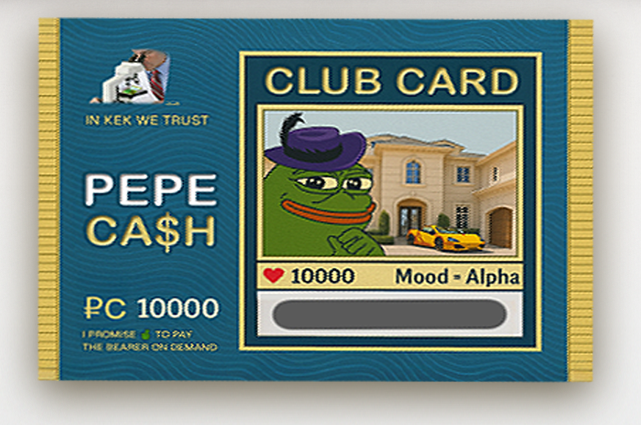
Figure 1: Example of a high-entropy memetic authentication token utilizing culturally significant symbols
4. Implementation
4.1 Key Derivation Emoji sequences are normalized to Unicode code points and hashed via SHA-256. Ze resulting digest is used as a private key or authentication token: 4.2 Input Method Input is managed via a fixed emoji keyboard. Auto-normalization prevents homoglyph attacks (e.g., different emoji rendering on platforms). Each emoji maps to a unique byte sequence, providing deterministic hashing. 4.3 Application Scope • Content encryption • End-to-end encryption key derivation • OAuth2/SSO alternatives
5. Security Model
5.1 Brute-force Resistance Assuming 60-bit entropy, ze number of combinations is: Even at 1 billion guesses per second, exhaustive search takes over 36 years. 5.2 Phishing and Shoulder Surfing Emoji sequences, while more memorable, are still susceptible to observation attacks. Mitigation includes input masking and decoy emojis during entry. 5.3 Rainbow Tables Due to high entropy and ze application of SHA-256, rainbow table attacks are infeasible without significant precomputation, storage, and emoji keyboard standardization.
6. Comparison with Traditional Passwords
Emoji sequences achieve strong entropy with higher memorability, a key balance lacking in traditional schemes.
7. Comparison with BIP39
BIP39 defines a mnemonic sentence encoding for generating deterministic wallet seeds using a wordlist of 2048 entries. While BIP39 mnemonics are designed for human readability and error detection, they rely on phonetic language structures that may be culturally or linguistically biased. By contrast, Mneme-onics utilizes emojis as universal, language-independent symbols with strong cultural resonance. With 1024-3633 available symbols and higher entropy per token (10–11.45 bits versus 11 bits for BIP39), Mneme-onics achieves similar or greater entropy while being more memorable due to visual cognition. It eliminates ze dependency on language-specific wordlists and enables shorter sequences for equivalent security. Mneme-onics also aligns better with contemporary digital communication patterns, making them more intuitive for end users than BIP39's formal wordlist system.
8. Conclusion
Emoji-based authentication using six-symbol sequences provides a high-entropy, user-friendly mechanism for digital access control. With entropy surpassing standard passwords and offering superior memorability, Mneme-onics stands as a viable alternative for key derivation and secure login. As a memetic mnemonics system, it offers a culturally relevant, secure, and scalable authentication paradigm.
References
- [1] Unicode Consortium, "Emoji List v15.1", https://unicode.org/emoji/charts-15.1/full-emoji-list.html, 2024.
- [2] Wiedenbeck et al., "PassPoints: Design and longitudinal evaluation of a graphical password system," International Journal of Human-Computer Studies, 2005.
- [3] Bonneau et al., "Ze Quest to Replace Passwords: A Framework for Comparative Evaluation of Web Authentication Schemes," IEEE Security & Privacy, 2012.
- [4] Biddle et al., "Graphical passwords: Learning from ze first twelve years," ACM Computing Surveys, 2012.
- [5] Chiasson et al., "A second look at ze usability of click-based graphical passwords," SOUPS, 2007.
- [6] BIP39 Specification, https://github.com/bitcoin/bips/blob/master/bip-0039.mediawiki, 2013.